Isola Milan: what to see, where to eat and how to get there
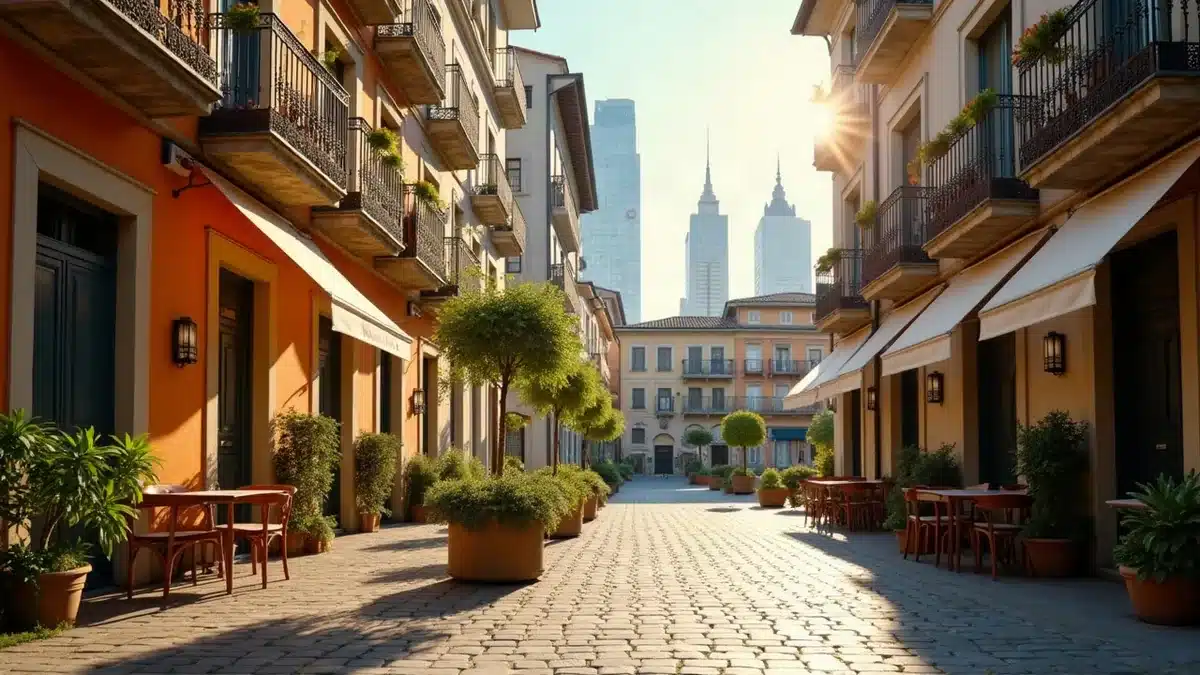
Isola Milan is the neighbourhood north of Porta Garibaldi station where narrow streets, craft workshops and old railing-balcony houses sit right next to some of the tallest towers in Italy. It is one of the few parts of the city that still feels like a village, even though it is only a short walk from the business district, and that contrast is exactly why so many visitors now put it on their list. This guide explains what Isola is, what is worth seeing, where to eat and drink, how to reach it and where to stay if you want to experience it properly.
What is Isola and why is it called the island?
The name means “island” in Italian, and it is a geographical joke that became a proper noun. For decades the area was cut off from the rest of the city by the railway lines running behind Porta Garibaldi station, so the people who lived there had their own shops, their own bars and their own habits. As the city’s official tourism portal explains, Isola is separated from the rest of Milan by the tracks and acts as a bridge between the old city and the skyscrapers of Porta Nuova.
That history still shapes the place today. The streets are small, the buildings are low, and many of them are the traditional Milanese casa di ringhiera, a block of flats with long shared balconies overlooking a courtyard. Between them you will find Art Nouveau details, rationalist buildings, social housing and plenty of street art. The official national tourism site describes Isola as the most vibrant, innovative and alternative area of the city, a former suburb that has been redeveloped without losing its character.
The result is a neighbourhood that is both local and international. In the morning you will see residents buying bread and vegetables at small shops. In the evening the same streets fill up with people going for an aperitif, a late dinner or a jazz concert. It is a good area for travellers who prefer walking and looking around to ticking off famous monuments.
How Isola changed: from railway suburb to creative district
Isola belongs to the large urban regeneration project known as Porta Nuova, which also includes the Garibaldi and Varesine areas. Each of the three parts has its own character. Garibaldi is dominated by Piazza Gae Aulenti and the UniCredit Tower, Varesine is the office and residential side towards Via Melchiorre Gioia, and Isola is the part with the greenery, the residential towers and the older streets. The Isola section was designed by the Boeri Studio, and its best-known creation is the Bosco Verticale.
What makes the area interesting is that the new buildings did not erase the old neighbourhood. You can stand on a street lined with traditional houses and see glass towers above the rooftops. A few steps later you are in a courtyard café, a small design shop or a workshop that has been there for years. If you like places where the past and the present are visibly mixed, Isola is one of the best examples in the city.
It is also a neighbourhood that has an active community. Local associations, cultural spaces and small initiatives organise events throughout the year, and the pedestrian squares created in recent years have become meeting points for residents. This is not a theme park version of Milan. It is a place where people live, and visitors are welcome to join in.
What to see in Isola Milan
There is no single must-see monument here. The pleasure is in the walk, with a few stops that are worth planning for. These are the places most visitors include.
Santa Maria alla Fontana
This is one of the oldest corners of the neighbourhood. The national tourism site describes the sanctuary of Santa Maria alla Fontana as an ancient place of worship dating back to around the year 1500, with an underground area where a spring is believed to have healing properties. It is a quiet stop and a reminder that Isola had a history long before the skyscrapers arrived.
Fonderia Napoleonica Eugenia
The former foundry is one of the most unusual places in the area. According to the same source, bells were made here and bronze was cast, including the statue of Vittorio Emanuele II that stands in Piazza Duomo. Today the building is a historical museum that hosts exhibitions and events, so it is worth checking what is on before you go.
Bosco Verticale
The two residential towers covered in trees and shrubs are the image most people associate with this part of Milan. You cannot go inside, as they are private homes, but you can see them clearly from the streets and from the park. They were designed by the Boeri Studio and sit on the edge of Isola, so a photo stop is easy to combine with a walk through the neighbourhood.
BAM, the Biblioteca degli Alberi
The park is the natural link between Isola and the modern districts. According to the official site, BAM is a public park owned by the City of Milan, managed by the Riccardo Catella Foundation, without fences, and connecting Piazza Gae Aulenti, the Isola district, Via Melchiorre Gioia and the Varesine promenade. The park has around 500 trees arranged in 22 circular forests, with more than 100 botanical species. It is a good place to slow down, sit on the grass and look at the towers from below.
Mercato Isola and the craft streets
The city’s tourism portal recommends the newly renovated covered market, with gourmet food and delicacies, near the Zara metro stop. It also points visitors to Via Borsieri and Via Thaon di Revel for shops selling everything from ceramics to jewellery design. This is where the creative reputation of Isola is easiest to see: small independent studios, concept stores and workshops rather than big chains.
Piazzale Archinto and the pedestrian squares
Not every highlight is a building. The same guide mentions Piazzale Archinto, a square transformed through tactical urbanism where locals gather, and the nearby Isola del Pepe Verde, a relaxed spot with benches linked to an eco-activism hub. These places show how the neighbourhood uses public space, and they are good places to stop for a coffee and watch daily life.
Where to eat, drink and go out in Isola
Food and nightlife are a big part of the reputation of this area. The official tourism site lists shopping in craft stores and thrift shops, an aperitif, dinner at traditional and ethnic restaurants, and jazz concerts in local clubs among the things to do. In practice that means three kinds of experiences.
The first is the classic Milanese aperitivo. Early evening is the best time, when bars put out small plates with their drinks and the streets start to fill. It works as a light dinner if you are not very hungry, and it is easy to do on foot because there are many options within a few minutes of each other.
The second is dinner in a trattoria or a restaurant. Isola has family-run places with traditional Lombard and Italian cooking next to newer venues with international menus. Booking ahead is a good idea on Friday and Saturday evenings, because the neighbourhood is popular with locals as well as visitors.
The third is the late evening. Via Valtellina is known for its bars, with vegan aperitifs, gin and wine selections and food that continues late into the night, and it is close to the Maciachini metro stop. If you prefer music, look for the live jazz venues on and around Via Borsieri. Check the programmes in advance, as concerts depend on the day.
If you are planning a longer stay, it helps to keep in mind that Isola is lively in the evening, especially at weekends. If you want a quieter night, it is worth staying in a nearby residential area rather than in the middle of the bar streets, and that is one reason many travellers choose a base in the next neighbourhood.
How to get to Isola Milan
Isola is easy to reach by public transport, and walking is often the best option once you are in the area.
- Metro M5 (lilac line): the Isola stop is the closest to the heart of the neighbourhood.
- Metro M2 (green line) and M5: both stop at Garibaldi, and from there you can walk across to Isola.
- Metro M3 (yellow line): Zara is the stop for the covered market, and Maciachini is convenient for Via Valtellina.
- Trains: Porta Garibaldi station has regional and national connections, and it sits right beside the neighbourhood.
- On foot: from Piazza Gae Aulenti and the BAM park, you walk into Isola without crossing any major road.
If you are travelling by car, remember that the city has limited traffic zones, and the Isola area has been affected by access rules in the past. Rules, hours and perimeters can change, so check the Comune di Milano website before you drive in. For most visitors the metro is simpler, faster and cheaper than parking.
A relaxed half-day route through Isola
If you only have a few hours, this route covers the highlights without rushing.
- Start at Porta Garibaldi station and walk to Piazza Gae Aulenti, looking up at the towers.
- Enter BAM from the piazza and walk through the circular forests towards the Bosco Verticale.
- Leave the park into Isola, and walk along Via Borsieri and Via Thaon di Revel to see the workshops and shops.
- Visit Santa Maria alla Fontana, and check whether the Fonderia Napoleonica Eugenia has an exhibition on that day.
- Stop at the covered market or at Piazzale Archinto for a coffee, then decide where to have an aperitif.
- If you still have energy, end the evening on Via Valtellina or at a jazz venue.
With a little more time, you can add the Brera district or the Navigli to the same day, but Isola rewards slow exploration, so it is better not to overload the schedule.
Best time to visit Isola
Spring and early autumn are the most comfortable seasons for walking, with mild temperatures and long evenings for the aperitif. In summer the streets are quieter during the day and livelier at night, while winter is a good time for the covered market and the indoor venues. During Milan Design Week and other major events the whole city gets busier, and the creative districts, Isola included, are often very full. If you plan to visit in those periods, book your accommodation early and allow extra time for transport.
Weekday mornings are a calm time for photographs and for browsing the small shops. Friday and Saturday evenings are the most animated, so choose according to the atmosphere you want.
Where to stay for Isola and Porta Nuova
The best base for visiting Isola is somewhere you can reach it without effort, but where you can also rest. Studio Inn Centrale is on Via Cardinal Cagliero 14/A, in the Maggiolina district, near Palazzo Lombardia and a little over one kilometre from Milano Centrale station. The Maggiolina neighbourhood is adjacent to the Garibaldi, Isola and Varesine areas that form the Porta Nuova project, so the area you want to explore is practically next door. By metro you can take the M3 to Sondrio and walk a short distance, or use bus 42, and the M2, M3 and M5 lines are all nearby.
The property combines a hotel with single and double rooms and a residence with studios, two-room apartments and suites with a fully equipped kitchen, which suits both short city breaks and longer stays. Guests can use the spa with sauna, reaction tub and massage rooms by reservation, which is a welcome way to end a day of walking. You can see everything on offer on the services page, and the location page shows how the area connects to the rest of the city.
If you prefer the west side of the city, on the M1 line, Studio Inn De Angeli offers independent apartments designed for longer stays. The two properties serve different needs: Centrale is better placed for Isola, Porta Nuova and the station, while De Angeli is closer to CityLife, the trade fair and San Siro.
Practical tips for visiting Isola
- Wear comfortable shoes. The area is flat, but the best way to enjoy it is to walk.
- Check opening days for the Fonderia Napoleonica Eugenia and the sanctuary before you go, as hours vary.
- Reserve dinner at weekends, especially for groups.
- Use the metro rather than the car. Limited traffic zones and parking rules can change.
- Keep the evening for the aperitif and the late walk, and the morning for the park and the shops.
- If you are visiting for work in Porta Nuova, Isola is a pleasant place for dinner after meetings, and it is within walking distance of the offices.
Key points at a glance
Isola Milan is a walkable neighbourhood north of Porta Garibaldi station, named after the railway tracks that once isolated it from the rest of the city. It combines traditional railing-balcony houses, craft workshops, the sanctuary of Santa Maria alla Fontana and the Fonderia Napoleonica Eugenia with the Bosco Verticale and the BAM park on its edge. You can reach it on the M5 (Isola stop), the M2 and M5 (Garibaldi) and the M3 (Zara and Maciachini), and the evenings are best for an aperitif or live jazz. Studio Inn Centrale, in the Maggiolina district next to the Porta Nuova areas, is a comfortable base for exploring Isola on foot.
Frequently asked questions about Isola Milan
What is Isola known for in Milan?
Isola is known for its creative, alternative character: small independent shops, craft workshops, street art, traditional trattorias, aperitif bars and live music venues. It is also known for the contrast between its low historic buildings and the Porta Nuova skyscrapers, including the Bosco Verticale, which stand right next to it.
How do I get to Isola from Milano Centrale?
The simplest way is to take the metro. From Centrale you can reach Garibaldi on the M2 line and then walk into Isola, or change to the M5 line and get off at the Isola stop. The journey is short, and you can also continue on foot from Garibaldi through Piazza Gae Aulenti and the BAM park.
Is Isola a good area to stay in Milan?
It depends on what you want. Isola is lively and atmospheric, with plenty of places to eat and drink, but it can be busy in the evenings. Many travellers prefer a base in the neighbouring Maggiolina district, which is calmer and still close to the Garibaldi, Isola and Varesine areas, with good metro connections to the rest of the city.
How long do I need to explore Isola?
Half a day is enough to see the main sights and have an aperitif, and a full day lets you add the park, the market and a relaxed dinner. If you like browsing small shops and sitting in cafés, you can easily spend longer.
Plan your visit to Isola and Porta Nuova
Isola works best when you give it time: a morning in the park, a slow lunch, an afternoon among the workshops and an evening with an aperitif or some live music. If you would like a comfortable base nearby, with a hotel and residence formula and a spa for the end of the day, you can choose the property that suits your plans and your length of stay.
Book your stay directly with us: choose your room or apartment at Studio Inn Centrale and check the available dates. If you would like advice before you decide, contact us and we will help you find the right solution.